When engineers and designers select materials for bushings, bronze consistently ranks as one of the most trusted and widely used options across industries. From heavy construction equipment to precision aerospace components, bronze bushings appear in countless mechanical systems. But what exactly makes bronze so well-suited for this role? The answer lies in a unique combination of physical and mechanical properties that few materials can replicate. This article explores the specific reasons why bronze is chosen for bushings and the performance advantages it delivers in real-world applications.
What Is a Bronze Bushing and How Does It Work?
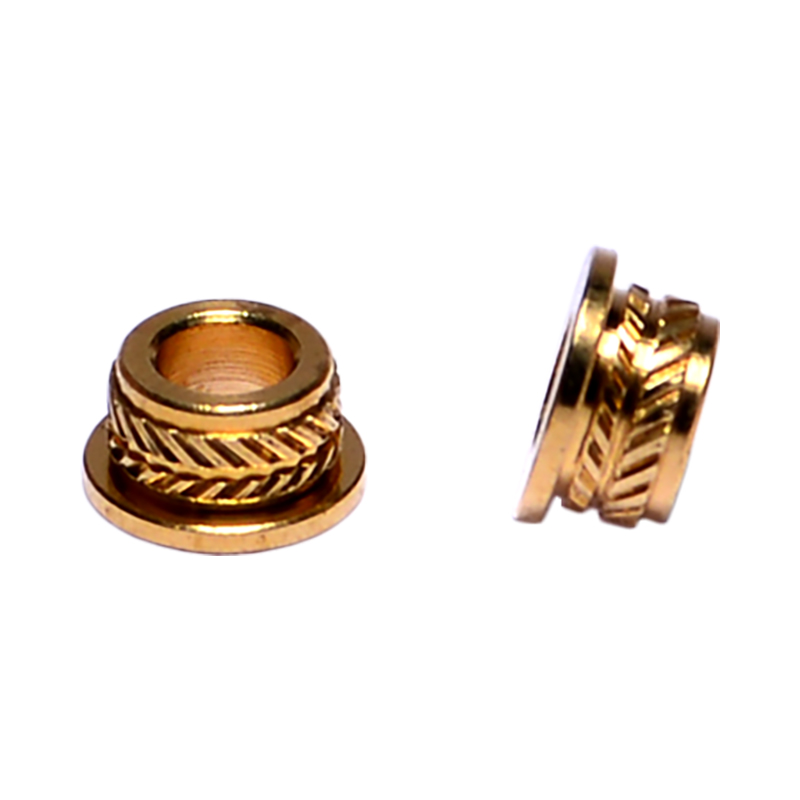
A bushing, also known as a plain bearing or sleeve bearing, is a cylindrical component inserted between two moving parts to reduce friction, absorb shock, and maintain alignment. Unlike rolling-element bearings, bushings operate through direct surface contact, making the material choice critically important. Bronze bushings act as a sacrificial wear layer—they are designed to wear before the more expensive shaft or housing does, protecting the broader mechanical assembly and extending its service life.
Bronze is an alloy primarily composed of copper and tin, though modern formulations may include additional elements such as lead, phosphorus, aluminum, or manganese. Each variant is engineered to optimize specific performance characteristics, but the copper-based foundation gives all bronze alloys a common set of properties that make them highly effective in bushing applications.
Self-Lubricating Properties That Reduce Maintenance Demands
One of the most valued properties of bronze—particularly oil-impregnated sintered bronze—is its ability to self-lubricate. During manufacturing, sintered bronze bushings are produced through a powder metallurgy process that creates a porous structure. This structure is then saturated with lubricating oil. When the bushing is in operation, heat generated by friction causes the oil to expand and migrate to the contact surface, creating a thin lubricating film that dramatically reduces metal-to-metal contact.
When the machine stops and cools, the oil is reabsorbed back into the pores. This cycle repeats continuously throughout the bushing's service life, enabling operation with minimal or no external lubrication. This self-lubricating behavior is especially advantageous in applications where regular relubrication is difficult, hazardous, or costly—such as in food processing equipment, agricultural machinery, or automated assembly lines.
Superior Wear Resistance Under Continuous Operation
Bronze is well known for its exceptional wear resistance, which is a critical factor when components are subject to continuous sliding motion. The crystalline structure of bronze allows it to withstand abrasive contact without rapidly degrading. This is particularly true for phosphor bronze (tin-phosphor alloys), where the addition of phosphorus increases hardness, strength, and resistance to surface fatigue.
A key reason for bronze's wear performance is its compatibility with steel shafts. Bronze and steel form a favorable tribological pairing—meaning they slide against each other with relatively low friction and wear rates. Unlike harder materials that may score or seize a steel shaft, bronze tends to wear gradually and predictably, which simplifies maintenance planning and replacement scheduling. The bushing wears rather than the shaft, and replacing a bushing is far cheaper than replacing a precision-ground shaft.
High Load-Bearing Capacity for Demanding Applications
Bronze bushings can support significant radial and axial loads due to the inherent strength of the alloy. Compared to polymers or softer metals, bronze provides a rigid bearing surface that resists deformation under pressure. This is particularly important in applications involving slow, oscillating movements under heavy loads—conditions where rolling-element bearings often struggle.
Aluminum bronze variants, for example, are used in extremely demanding environments such as hydraulic piston pins, crane hooks, and marine propeller shafts. These alloys can withstand bearing pressures exceeding 1,500 kg/cm² in certain configurations, making them suitable for industries where structural integrity is non-negotiable. The combination of high compressive strength and low coefficient of friction allows bronze bushings to operate reliably even in systems subjected to shock loading or vibration.
Outstanding Corrosion Resistance in Harsh Environments
Copper-based alloys are naturally resistant to corrosion, and this extends to most bronze formulations. Bronze does not rust in the way that iron or plain steel does. Instead, it forms a stable oxide layer on its surface that acts as a protective barrier against further oxidation. This passive layer regenerates if the surface is scratched or abraded, giving bronze a degree of self-healing corrosion protection.
In wet or humid environments, marine applications, or systems exposed to mild chemicals, bronze bushings significantly outperform ferrous alternatives. Naval bronze and aluminum bronze in particular are widely used in pumps, valves, and offshore equipment because they can resist seawater corrosion over extended periods. This corrosion resistance directly translates to longer service intervals and reduced replacement costs.
Thermal Conductivity That Prevents Overheating
Bronze has a significantly higher thermal conductivity than most plastics and polymers used in bearing applications. This property enables bronze bushings to dissipate frictional heat away from the contact zone more efficiently, preventing localized overheating that could cause thermal expansion, seizure, or accelerated wear. In high-speed or continuous-duty applications, effective heat management is critical to maintaining dimensional tolerances and protecting adjacent components.
When a plastic or composite bushing retains heat, it can deform, swell, or lose mechanical strength—none of which are concerns with bronze. Bronze maintains its structural integrity and dimensional accuracy across a broad temperature range, which makes it suitable for both cryogenic applications and elevated-temperature environments depending on the specific alloy selected.
Common Types of Bronze Used for Bushings
Different industrial requirements call for different bronze alloys. Below is a summary of the most commonly used types and their key characteristics:
| Bronze Type |
Main Alloying Elements |
Key Advantages |
Typical Applications |
| Phosphor Bronze |
Cu, Sn, P |
High fatigue strength, excellent wear resistance |
Gears, springs, electrical connectors |
| Sintered Bronze |
Cu, Sn (porous) |
Self-lubricating, low maintenance |
Electric motors, fans, appliances |
| Aluminum Bronze |
Cu, Al, Fe, Ni |
High strength, excellent corrosion resistance |
Marine, hydraulic, heavy machinery |
| Leaded Bronze |
Cu, Sn, Pb |
Excellent machinability, good load capacity |
Automotive, industrial bearings |
| Manganese Bronze |
Cu, Zn, Mn, Fe |
Very high strength and hardness |
Propellers, bridge plates, heavy bearings |
Machinability and Design Flexibility
Bronze is significantly easier to machine than hardened steel, which reduces manufacturing costs and allows for tighter dimensional tolerances. This machinability means that bronze bushings can be custom-fabricated to precise specifications with standard CNC turning equipment. Complex internal geometries, flanged designs, thrust surfaces, and oil grooves can all be incorporated without specialized tooling.
In addition, bronze does not require post-machining heat treatment to achieve its mechanical properties, unlike many hardened steel alternatives. This simplifies the production process and reduces lead times. The ability to produce bushings in small batches or one-off custom sizes makes bronze particularly attractive for replacement parts in older machinery or specialized industrial equipment.
Performance Comparison: Bronze vs Other Bushing Materials
Understanding why bronze is selected often requires comparing it to competing materials:
- Bronze vs Cast Iron: Cast iron is brittle and lacks the corrosion resistance and ductility of bronze. Under impact or vibration loading, cast iron bushings are far more prone to cracking. Bronze absorbs shock better and maintains performance in variable load conditions.
- Bronze vs PTFE/Polymer Bushings: While polymer bushings offer zero-lubrication operation and lightweight design, they are limited in load capacity, temperature range, and dimensional stability. Bronze outperforms polymers in high-load, high-temperature, or thermally demanding environments where deformation cannot be tolerated.
- Bronze vs Babbitt Metal: Babbitt (white metal) is softer and conformable, making it suitable for high-speed shaft applications with hydrodynamic lubrication. However, bronze offers much higher load-bearing capacity and structural integrity, making it the preferred choice where precision fit and rigidity are required.
- Bronze vs Hardened Steel Bushings: Hardened steel bushings are durable but present a higher risk of shaft scoring due to their hardness. They also require consistent external lubrication. Bronze, with its favorable hardness differential relative to steel shafts, is far less likely to damage mating surfaces and is more forgiving in low-lubrication scenarios.
Industries and Applications Where Bronze Bushings Excel
The performance characteristics of bronze make it the material of choice across a diverse range of industries and applications:
- Construction and Mining Equipment: Excavators, bulldozers, and drilling rigs use bronze bushings in pivot joints and bucket pins where constant oscillation and heavy loads occur under contaminated conditions.
- Marine Industry: Propeller shaft bushings, rudder bearings, and pump components benefit from bronze's saltwater corrosion resistance and strength.
- Automotive Manufacturing: Suspension systems, steering components, and transmission assemblies rely on bronze bushings to handle dynamic loading with minimal maintenance.
- General Industrial Machinery: Conveyor systems, press tools, pumps, compressors, and textile machinery all employ bronze bushings where reliable, long-lasting bearing performance is required.
- Power Generation: Turbines and generators use bronze bushings to manage the thermal and mechanical demands of continuous high-energy operation.
Why Bronze Remains the Standard Choice for Bushing Applications
Bronze has been used in mechanical systems for centuries, and its continued dominance in bushing applications is no coincidence. Its unique combination of self-lubrication, wear resistance, corrosion protection, load capacity, thermal management, and machinability creates a material profile that is difficult to replicate with a single alternative. While newer materials and composites have carved out niches in specific applications, bronze remains the benchmark against which other bushing materials are measured.
Selecting the right bronze alloy for a specific bushing application requires careful consideration of operating speed, load magnitude, environmental conditions, and lubrication availability. Working with a knowledgeable supplier or metallurgical consultant can help ensure the optimal alloy is specified. But whatever the application, one principle holds true: when long service life, reliability, and minimal maintenance are the priorities, bronze is almost always a sound engineering choice.